Introduction
Agricultural water treatment includes the methods that maintain the quality of stored water before it reaches the fields or industrial processing lines. Facility operators often notice clear reservoir water, yet crops and facility systems show stress that fertilizers and extra watering cannot fix. This stored water undergoes a predictable process that remains invisible to the eye but measurably impacts plant roots, piping infrastructure, and overall yields.
Poor water quality causes much of this damage long before any surface symptoms appear. Facility managers who recognize these invisible biological and chemical changes can intervene early and secure crop health and system reliability. Without early intervention, stored water loses oxygen, and root performance degrades significantly in most greenhouse crops when dissolved oxygen drops below 5 mg/L. A review of the specific stages of water degradation reveals exactly why early treatment remains necessary.
Why reservoir water changes after collection
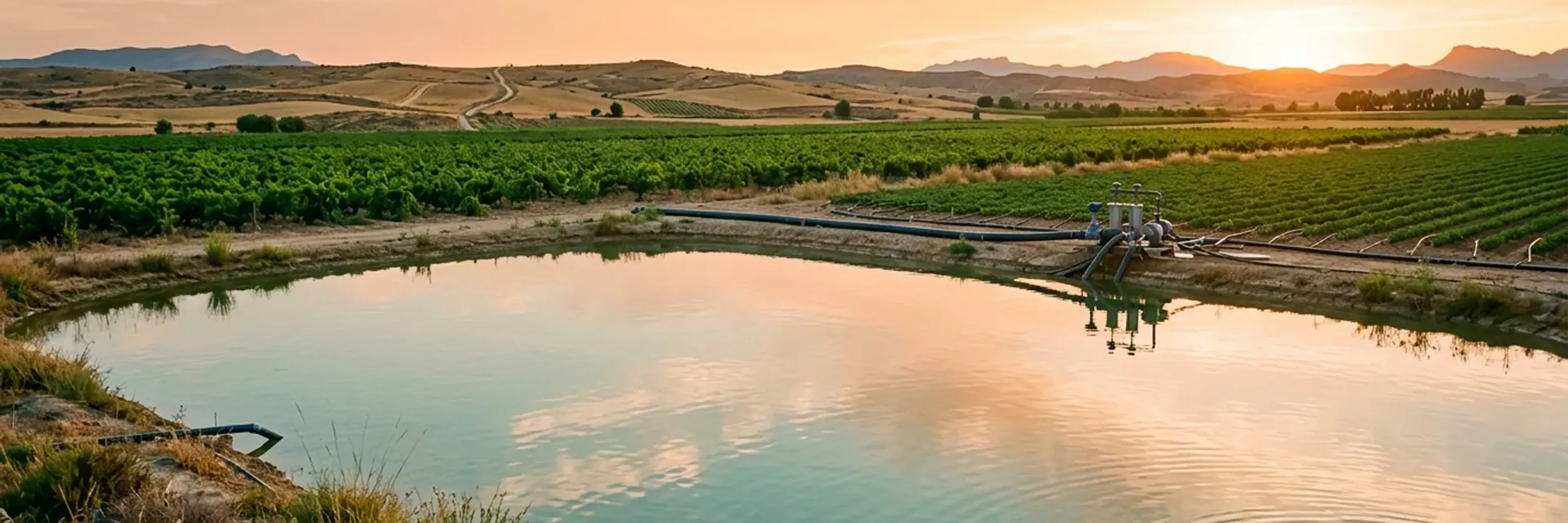
Water loses stability the moment it enters an impoundment facility. Physical, biological, and chemical processes immediately alter the composition of stored water. A common assumption suggests that holding water in a reservoir keeps it safe for later use, and this belief leads to delayed responses. Calm surface water hides the rapid changes that happen below. Effective agricultural water treatment works best when applied before degradation reaches harmful levels.
Impounded water acts as a living biological system rather than a static resource. The upper water layers warm in the sunlight, and sediment settles at the bottom. These physical shifts trigger subsequent biological reactions in the water. Microorganisms begin to multiply as chemical balances shift across the water column. Green or foul-smelling water indicates that the degradation process has already advanced too far.
Early water treatment stops these biological chain reactions before they multiply into larger problems. Immediate treatment after collection maintains a consistent water quality standard and protects the entire distribution system from contamination. This consistent quality ensures that the water remains suitable for application weeks or months later in the season. Facility managers maintain this quality when they monitor the specific physical changes that happen during the first week of storage.
First week thermal stratification and oxygen loss
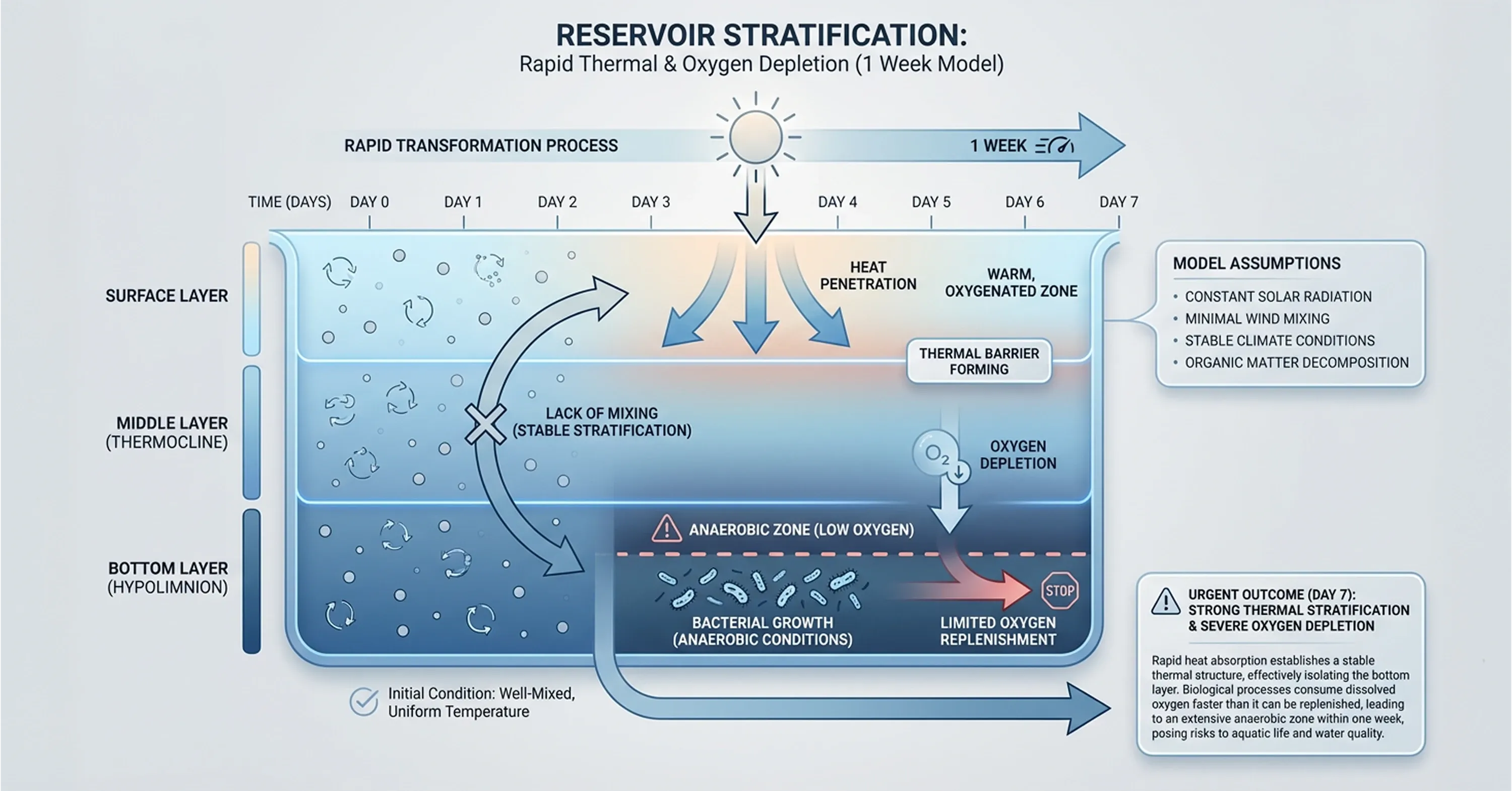
During this first week, thermal stratification forms an invisible barrier that cuts off deeper reservoir water from atmospheric oxygen. High surface temperatures accelerate this physical division within days rather than weeks. The sun heats the top water layer during the first week of storage. This warm water becomes less dense and floats above the colder, heavier water below.
The bottom water layer loses its connection to the air because these layers do not mix. A baseline measurement of dissolved oxygen tracks how quickly this depletion happens. Climate warming strengthens thermal stratification in lakes and prevents oxygen transport to deeper water layers.
The water becomes anaerobic when the bottom layer runs out of oxygen. This specific dynamic sets the foundation for water quality issues. Warm climates speed up this timeline significantly. Pond oxygen depletes after 2-3 days of overcast weather combined with warm temperatures. These rapid shifts require early intervention.
Most standard lake thermal stratification models assume a gradual seasonal shift. However, shallow reservoirs experience these changes almost immediately. Implementing irrigation water treatment during this first week prevents the deep water from turning anaerobic. Delayed treatment allows these anaerobic conditions to support bacteria and release unwanted elements. These bacteria and unwanted elements become severe threats as the storage time increases.
Weeks two to four bring invisible threats
These severe threats multiply because pathogen proliferation and nutrient release accelerate rapidly during the second, third, and fourth weeks of storage. The water can appear completely clear while carrying organisms that cause agricultural or systemic damage. This visual deception often delays necessary interventions. Waiting until problems appear allows these microscopic organisms to mature fully. Microbes multiply in the anaerobic bottom layer and spread throughout the reservoir. These organisms soon enter the distribution network.
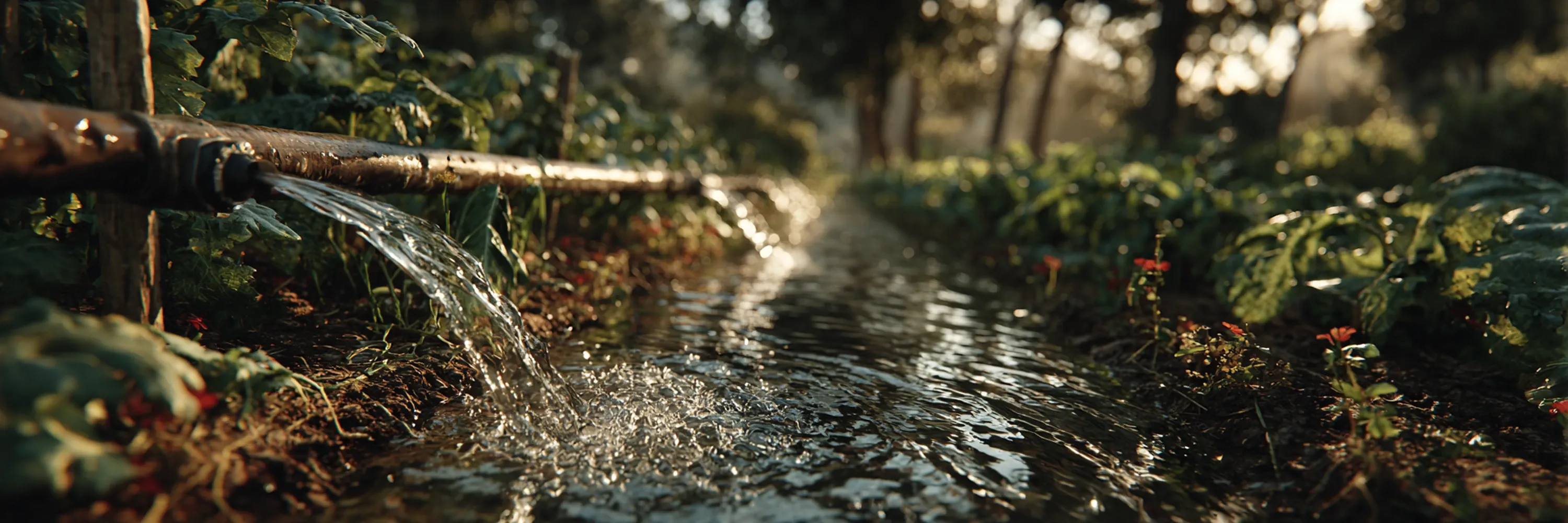
Pumping untreated water sends contaminants directly to the plant roots or industrial systems. Applying irrigation water treatment during this window stops pathogens before they reach their final destination. Ozone irrigation systems offer one way to neutralize these microorganisms. Ozone destroys the cellular walls of bacteria and prevents them from multiplying.
Effective biofilm management in agricultural pipes requires addressing the water quality at the source. Proactive reservoir water treatment protects the downstream infrastructure. Clean-looking water does not guarantee safety. The chemical and biological composition of the water matters much more than its clarity. This biological composition includes protective structures that bacteria build.
Biofilm formation and water treatment timing
These protective structures appear when biofilms develop rapidly and protect harmful bacteria from basic interventions. These slimy layers cling to reservoir walls and pipe surfaces. Established biofilms create a shield that blocks standard chemical treatments. Timely treatment prevents these protective layers from establishing a stronghold in the system. Pathogens thrive inside these protected environments.
For example, E. coli O157:H7 survives for 14 days in untreated irrigation water at 4°C and 6 days at 20°C. A systematic approach to water management disrupts this formation process. Early treatments stop the bacteria from secreting the sticky matrix and forming the biofilm. Early intervention keeps the infrastructure clean and reduces pathogen survival rates. However, pathogen survival rates increase drastically when reservoir oxygen levels drop.
Pathogen proliferation in low oxygen
Low oxygen levels create anaerobic conditions that highly favor the survival and growth of plant pathogens. Harmful microorganisms dominate the aquatic ecosystem when reservoir oxygen levels drop. Untreated water quickly becomes harmful to young plants and other biological organisms. These threats persist in the water supply for extended periods. These microscopic organisms do not simply die off over time.
Phytophthora species remain viable for 21 years in sterile distilled water, and Pythium survives for 7 years. Low oxygen environments allow these pathogens to wait for an ideal host. Pumping this untreated water delivers these pathogens directly to vulnerable root zones. Maintaining high oxygen levels and treating the water eliminates these organisms before they cause systemic damage. High oxygen levels also prevent unwanted chemical reactions at the bottom of the reservoir.
Nutrient release complications
When the reservoir bottom lacks oxygen, bottom-water deoxygenation releases unwanted nutrients into the supply. Chemical bonds in the sediment break down when the reservoir floor loses oxygen. This breakdown pushes stored phosphorus and nitrogen back into the water column. This internal loading creates hidden toxicity that damages root structures immediately upon application. This toxicity often looks like an over-fertilization error.
Careful monitoring reveals that the reservoir itself generates this excess nutrient load. These released nutrients also feed further bacterial growth in the water. Managing the oxygen levels at the bottom of the reservoir prevents this chemical release. Early intervention keeps the sediment stable and stops internal loading. Without this early intervention during the first month, the reservoir enters a phase of visible deterioration.
Week four and beyond shows visible degradation
By the fourth week, this visible deterioration begins because the hidden biological and chemical changes finally produce visible signs of degradation. Algal blooms, iron precipitation, and fluctuating water clarity become apparent. Sometimes, the water appears to clear up after an algal bloom dies off. This false improvement in water clarity masks elevated danger. Dead algae release toxins, and decayed organic matter consumes even more oxygen. Clear water at this stage often indicates a highly toxic environment.
Extreme evaporation compounds all these problems by reducing the total water volume. Summer average evaporation rates from open water in warm climates reach 5.2 mm per day. This constant water loss severely impacts salinity levels through evaporative concentration. Water leaves behind salts, minerals, and contaminants as it evaporates. This process increases the concentration of harmful elements in the remaining volume.
Several late-stage indicators point to degraded water:
-
Heavy algal mats float on the reservoir surface.
-
Reddish-brown iron precipitation clings to pump intakes.
-
White mineral crusts form along the receding waterline.
-
Foul odors rise from the anaerobic bottom layers.
Constant readiness and agricultural water treatment stop the water from reaching this severe stage. Early use of ozone irrigation systems keeps the water stable and prevents these late-stage visual symptoms from ever developing. This prevention protects the crops from direct harm.
How degraded water harms plants
Degraded water harms crops directly, but facility managers often misdiagnose this water-driven plant damage as standard environmental stress. Degraded reservoir water harms plants through three specific mechanisms that mimic other system problems. Early irrigation water treatment before the water leaves the storage facility provides a practical control point for these failures. Operators who wait for visible symptoms to appear often face irreversible damage.
Operators monitor these primary mechanisms of hidden water damage:
-
Low dissolved oxygen blocks nitrogen uptake and physically stresses root systems.
-
Biofilm buildup clogs emitters and causes uneven water distribution across the system.
-
Waterborne pathogens attack vulnerable plant tissue and cause severe root disease.
These issues worsen quickly and destroy plants. For example, emitter clogging causes up to 50% of all drip irrigation system failures. System operators do not always recognize this uneven water distribution and often mistake it for poor soil fertility or inadequate fertilizer application. Similarly, pathogenic contamination looks exactly like drought stress or common soil disease.
According to researchers, Pythium root rot causes yield reductions up to 30-50% in severely affected areas. Effective prevention requires stopping these threats at the source rather than treating the soil later. Ozone irrigation systems reduce pathogen levels and break down biofilms before the water enters the distribution network. Local climate conditions often complicate this treatment process.
Why regional conditions compress degradation timelines
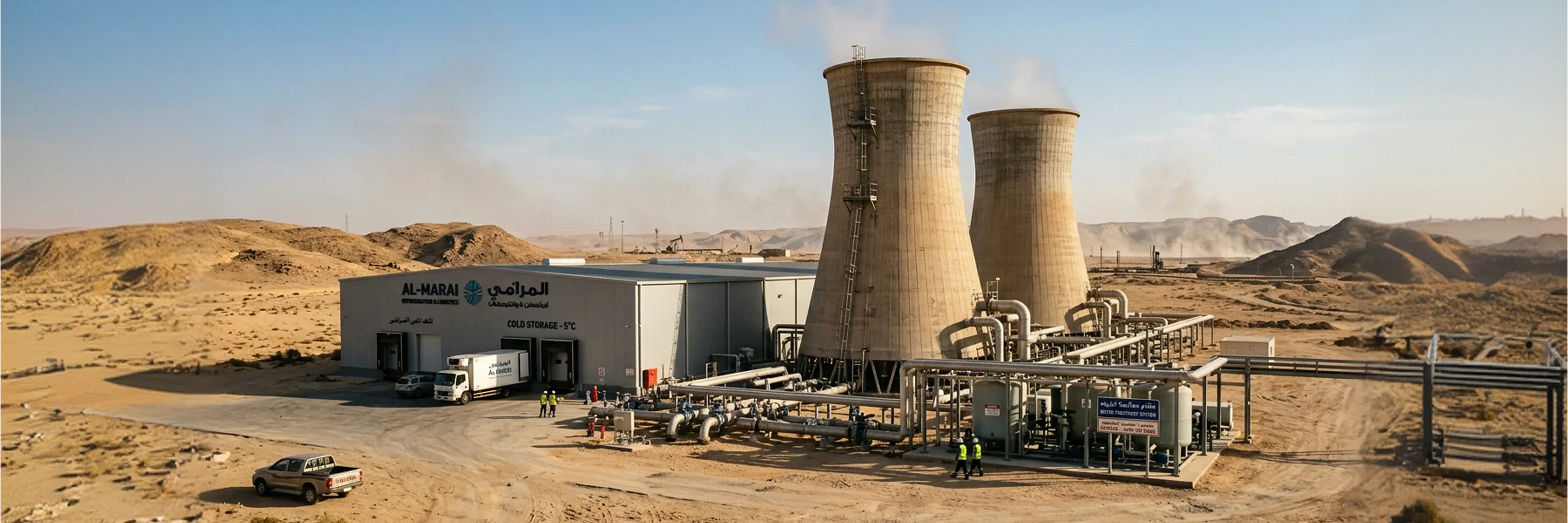
Local climate conditions create extreme challenges because arid climates accelerate all water degradation processes far beyond what temperate-region literature suggests. Extreme ambient temperatures heat shallow water sources rapidly, and this causes thermal stratification within days. Because local weather patterns deliver sparse but heavy rainfall, the sediment-rich runoff introduces massive organic loads into the water supply.
High evaporation rates worsen these baseline vulnerabilities. According to researchers, 12 of 17 most water-stressed countries face severe freshwater shortages. This scarcity forces facility operators to rely heavily on stored water, but the climate constantly works against them. The World Bank projects a 20% rainfall loss and higher evaporation from climate warming impacts.
As the water evaporates under the intense sun, salinity and contaminant concentrations spike in the remaining storage volume. Because these environmental pressures act aggressively, visual inspections do not protect the plants. System operators need a systematic approach to water management to navigate these harsh conditions. Early agricultural water treatment stabilizes the water chemistry before the heat triggers biological decay. Facility managers follow a specific schedule to implement this early treatment.
Practical agricultural water treatment options
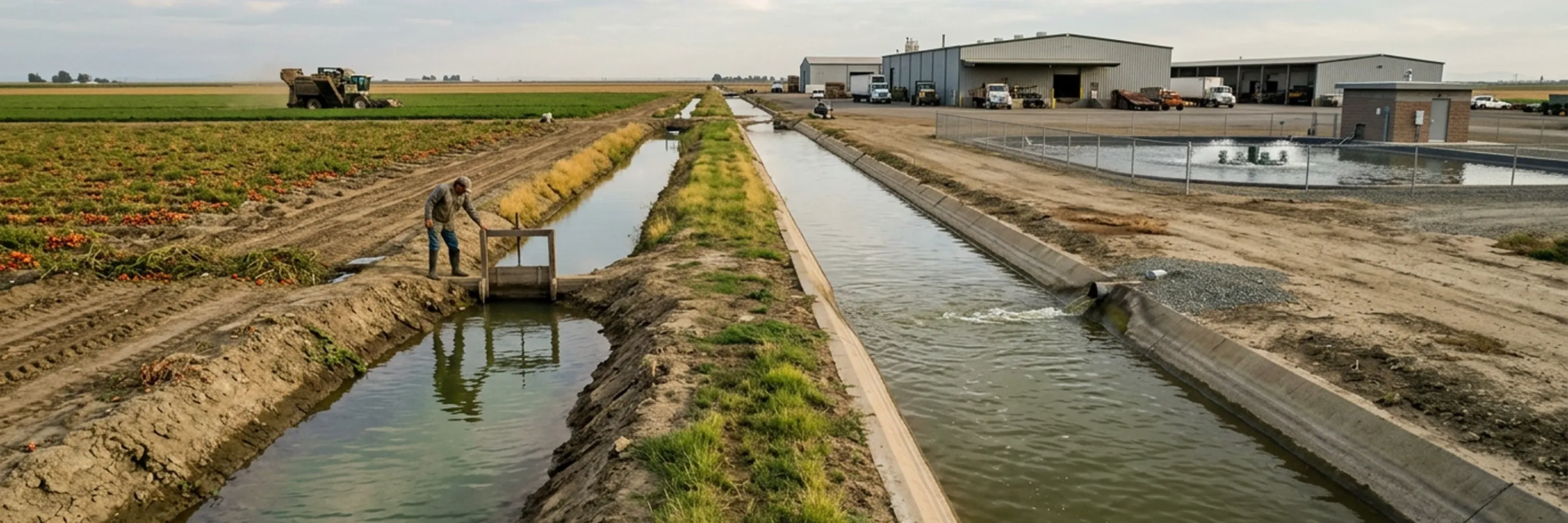
This specific schedule ensures that facility managers achieve better results and spend less money when they treat water before it degrades. A structured timeline helps operators implement agricultural water treatment effectively across the storage cycle. During the first week of storage, operators test the baseline water quality and apply primary filtration to remove large sediment. If the water source comes from canal runoff, managers typically initiate the first sanitation cycle immediately.
As the water enters weeks two and three, the treatment focus shifts to chemical balance and pathogen control. Operators often use acid injection for pH correction to lower the high alkalinity levels common in arid regions. Proper pH levels ensure that subsequent chemical treatments work efficiently. For pathogen control, basic chlorination provides an accessible defense mechanism. Agronomists note that two parts per million of free chlorine at discharge points controls both Pythium and Phytophthora in irrigation water.
From week four onward, operators monitor the water strictly before pumping it to the fields. Maintenance teams flush their emitters regularly to prevent iron and mineral buildup. To achieve long-term stability, many modern facilities upgrade to ozone irrigation systems. Ozone neutralizes bacteria and breaks down complex organic matter without chemical residues.
While these advanced systems require an initial investment, they reduce the daily labor of manual chemical dosing. Regardless of the specific technology chosen, early intervention maintains system efficiency and protects plant health long before the irrigation pumps turn on. The importance of this early intervention requires a final review.
Conclusion
In summary, reservoir water quality follows a predictable biological and chemical sequence that involves stratification, oxygen loss, pathogen proliferation, nutrient release, and evaporative concentration. Each stage builds on the previous one significantly faster than standard temperate-region models suggest.
Agricultural water treatment and industrial water management serve as pre-emptive interventions in a process that begins the moment water enters storage, and they prevent delayed responses to visible problems. Early treatment establishes a foundational water quality protocol that protects crops and facility infrastructure before operations start.
Agritopia provides the agricultural water treatment equipment and agri-tech solutions that make this early intervention practical for facilities operating in water-stressed environments. From automated irrigation systems to advanced ozone disinfection, Agritopia helps facility operators maintain consistent water quality throughout the storage cycle and protect their yields before the irrigation pumps turn on. Contact us to find out which water treatment solution fits your facility's specific conditions and storage requirements.