Introduction
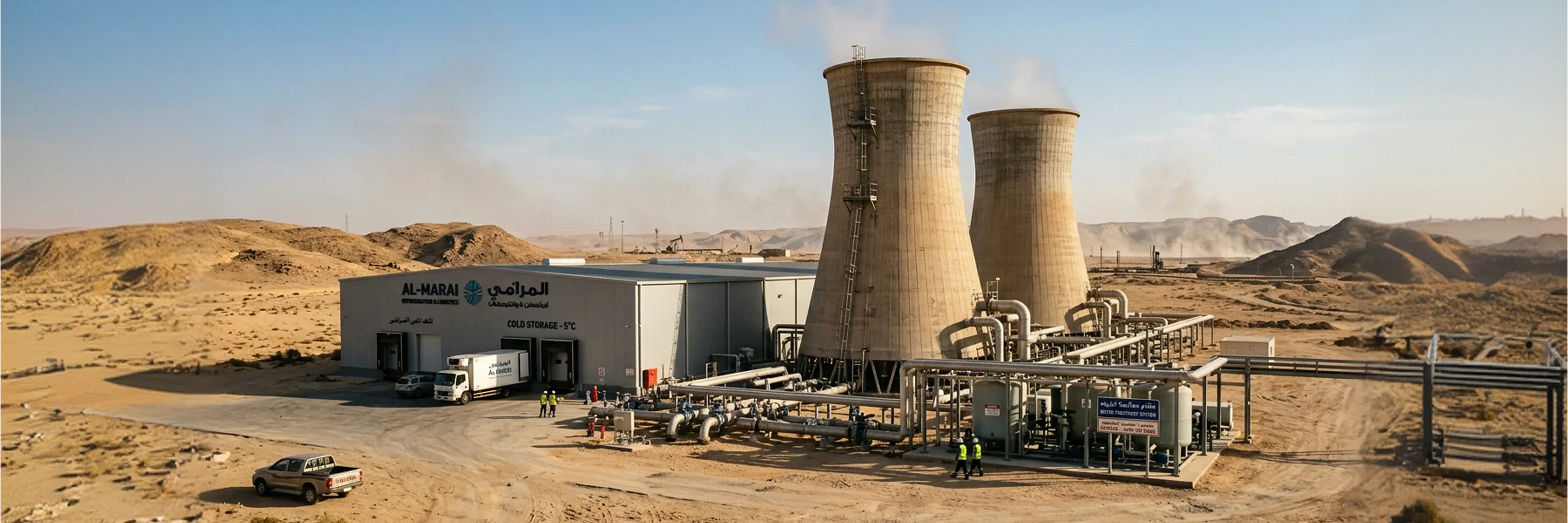
Food storage facilities rely on large refrigeration infrastructure to protect perishable goods from extreme external temperatures. Cooling tower water treatment rejects heat from these large refrigeration units. The Middle East and North Africa region imports approximately 90% of its food supply, and this reality makes an unbroken cold chain strictly necessary for regional stability. Historically, facilities used chlorine as the default chemical to manage microbial growth.
However, extreme ambient temperatures systematically break down conventional chlorine chemistry. The intense heat accelerates chlorine dissipation, encourages rapid bacterial growth, and increases mineral scaling. These failures compound one another and reduce refrigeration efficiency, inflate energy costs, and escalate food safety risks.
Recent geopolitical disruptions to desalination infrastructure and chemical supply chains expose the fragility of relying entirely on standard chlorine dosing. Water management failures disrupt the cold chain. Alternative treatment methods secure operations against thermal stress and unexpected chemical shortages.
Food Storage Depends on Cooling Infrastructure Reliability
Cooling towers serve as the heat-rejection backbone for every refrigeration system that protects perishable goods in warehouses, distribution hubs, and processing plants. These cooling systems absorb thermal energy from chiller loops and expel it into the atmosphere, and this continuous cycle keeps interior storage temperatures within safe ranges. When cooling tower water treatment deteriorates, heat exchange efficiency drops, compressors work harder, and energy costs climb. Poorly treated towers create ideal conditions for bacterial colonization, and this threatens both worker safety and regulatory standing.
Recent geopolitical disruptions across the region expose vulnerabilities in this infrastructure chain. Strait of Hormuz tensions and attacks on desalination facilities in Bahrain and Iran have interrupted water and chemical supplies that food storage operators once considered dependable. Food industry water treatment operations already function under strict quality demands, and any interruption to cooling tower dependability causes cold chain failures. These interruptions extend beyond a single facility.
Failure of Chlorine-Based Cooling Tower Water Treatment
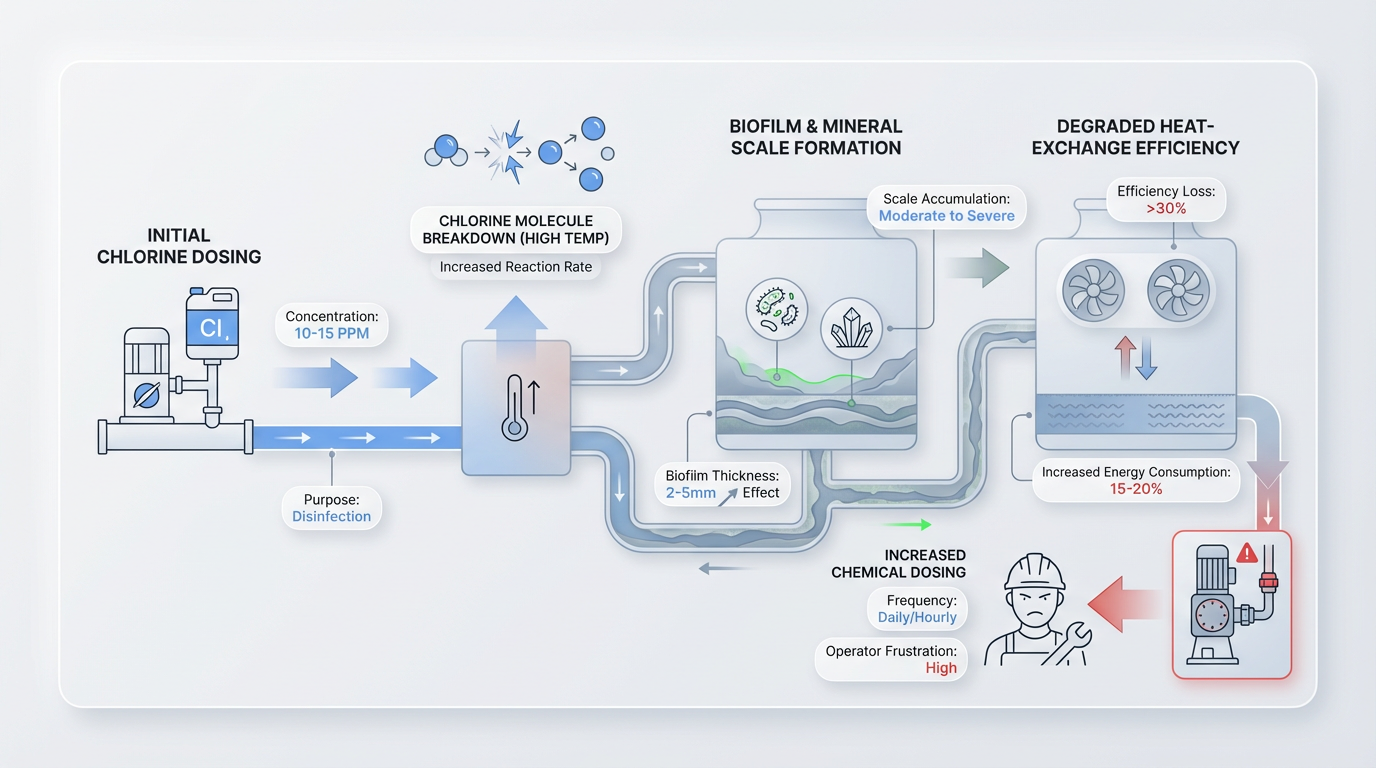
Chlorine has served as the global default biocide for decades, but MENA's thermal environment exposes three interconnected weaknesses. High ambient temperatures accelerate chlorine dissipation, promote rapid biofilm establishment, and intensify mineral scaling on heat-exchange surfaces. Each failure reinforces the other two. As chlorine residuals vanish, biofilm colonies grow unchecked. As biofilm thickens, it insulates surfaces and traps minerals. As mineral scale hardens, it shelters biofilm from whatever trace chlorine remains. This cycle erodes biofilm control faster than operators can compensate through increased chemical dosing.
Facilities do not experience a gradual decline in performance. Instead, these facilities experience a sharp tipping point where chlorine consumption rises, microbial counts spike, and heat-exchange efficiency drops within the same operational window. Standard treatment programs rely on chemical feed rates to maintain adequate residuals. Under MENA conditions, these programs fail because the rate of chemical degradation outpaces the rate of replenishment. Operators cannot maintain stability or consistency when the underlying chemistry works against the operating environment. A close look at each failure mechanism clarifies why the loop resists correction once it starts.
Accelerated Chlorine Dissipation Weakens Protection
Ambient temperatures between 40°C and 50°C increase both chlorine volatilization from the water surface and thermal decomposition within the recirculating loop. Free chlorine residuals deplete faster than chemical feed systems can replenish them, and the residual gap widens as water temperature rises through each cooling cycle. As free chlorine drops, combined chlorine accumulates as chloramines. These chloramines offer weaker oxidizing power and react sluggishly against established microbial colonies.
This depletion pattern removes any certainty that target residual concentrations will hold between dosing intervals. Operators often increase feed rates in response, but higher doses accelerate corrosion on metal surfaces, raise chemical costs, and fail to close the residual gap during peak afternoon temperatures.
Accelerated Growth Complicates Biofilm Control
Higher water temperatures cut bacterial generation times roughly in half compared to temperate conditions. Colonies that need weeks to establish in cooler climates anchor themselves to heat-exchange surfaces within days when recirculating water sits in the 25°C to 45°C range. A biofilm layer as thin as 0.05 millimeters degrades heat-exchange efficiency by up to 40% because the organic matrix acts as an insulating barrier between the metal surface and the water.
Legionella bacteria thrive precisely in this temperature window and find physical protection inside the biofilm matrix. Even when trace chlorine residuals persist in bulk water, the extracellular polymer structure shields organisms underneath from contact with the disinfectant. This sheltering effect causes surface-level protection to fail long before water-sample tests reveal elevated microbial counts.
Extreme Mineral Scaling Blocks Disinfection
Intense evaporation driven by low humidity and extreme solar radiation concentrates dissolved calcium, magnesium, and silica in recirculating water far faster than in temperate climates. Calcium carbonate exhibits inverse solubility and becomes less soluble as temperature rises. The scaling risk therefore peaks at the exact moment when cooling demand reaches its highest point.
Hardened scale deposits create rough, porous surfaces that anchor biofilm colonies and physically block chlorine from reaching organisms underneath. Aggressive chemical descaling programs struggle to keep pace during summer months when evaporation rates spike. Any treatment program depends on clean heat-exchange surfaces, and chlorine's ability to kill microorganisms drops sharply once mineral scale establishes a foothold.
Water-Scarcity Multiplier Limits Traditional Fixes
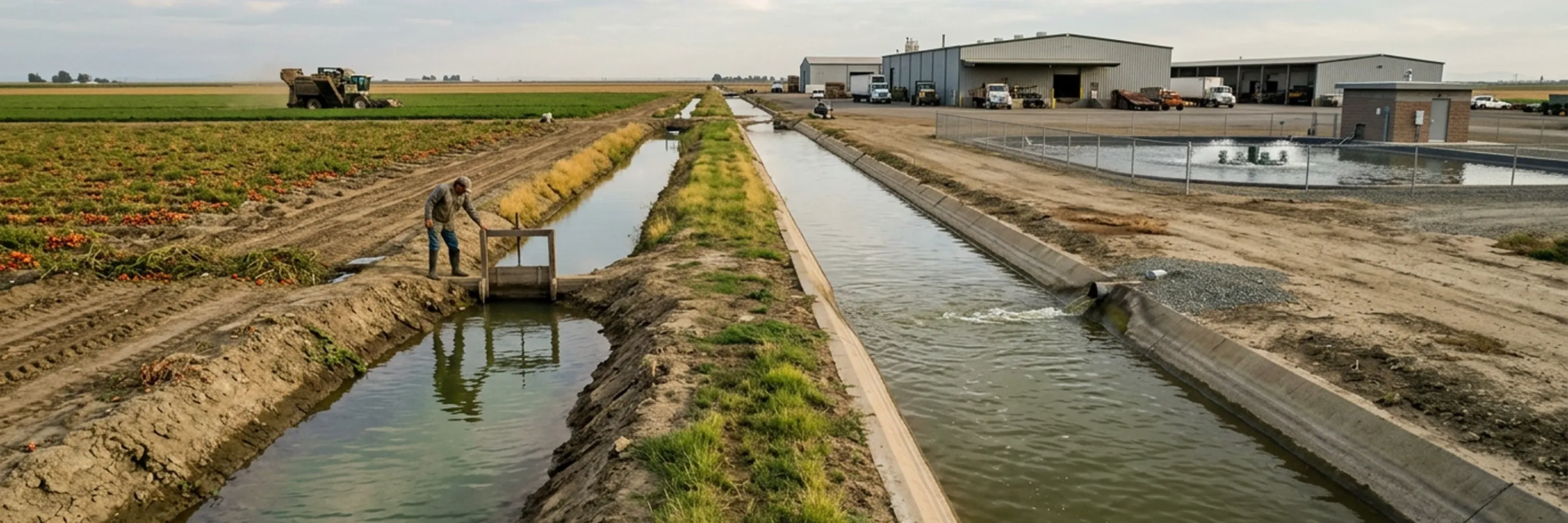
MENA's water scarcity compounds these treatment failures. The region accounts for a significant share of global operational desalination capacity, and desalinated makeup water carries residual minerals and trace elements that concentrate inside recirculating cooling systems.
Standard blowdown practice drains concentrated water to reset mineral levels, and this wastes large volumes that water-scarce facilities simply cannot afford. Every discarded liter requires replacement with expensive desalinated water, and the high cost per cubic meter in Gulf Cooperation Council (GCC) states makes excessive blowdown economically unsustainable.
Geopolitical supply-chain disruptions make the problem worse. Strait of Hormuz closures interrupt chemical supplies globally, and the Food and Agriculture Organization projects that chemical prices will increase 15–20% in the first half of 2026 due to ongoing production shutdowns. Specialized biocides and surface water treatment chemicals face identical supply exposure.
Blowdown optimization through precision timing, basin-bottom extraction, and laboratory analysis of dissolved-solids concentration reduces waste, but it fails to eliminate the fundamental problem. Operators work within these constraints and need trust in treatment methods that perform without dependence on fragile chemical supply lines.
The core limitations of traditional fixes in water-scarce MENA environments include:
-
Blowdown waste: Each drain-and-refill cycle consumes desalinated water that costs significantly more per cubic meter than municipal freshwater in temperate regions.
-
Chemical dependency: Chlorine and specialty biocide imports travel through the same maritime corridors vulnerable to geopolitical disruption.
-
Mineral reaccumulation: Desalinated makeup water reintroduces trace minerals that reconcentrate rapidly under extreme evaporation, and this restarts the scaling cycle within days.
-
Diminishing returns: Increased chlorine dosing compensates for rapid depletion but accelerates equipment corrosion and fails to solve the underlying thermal mismatch.
Alternative Treatment Technologies
Several non-chlorine technologies now offer the endurance that maintains biofilm control under constant thermal stress. Each technology addresses a different segment of the failure loop. A multi-barrier strategy combines these technologies and provides reliability that no single chemical delivers alone. The ozone method of water treatment illustrates how on-site generation eliminates supply-chain dependency and produces an oxidizer that reverts to oxygen without a toxic residual.
Effective cooling systems protection requires simultaneous management of corrosion, biofouling, scaling, and Legionella risk. The following technologies form the foundation of a multi-barrier program, and they rank by their independence from imported chemical supply:
-
On-site ozone generation produces ozone from ambient air, breaks down biofilms, and leaves no persistent residual. Dose optimization and adequate contact time remain critical because concentrations below 0.1 parts per million (ppm) in high-flow systems often fail to achieve sufficient microbial reduction.
-
Performic acid penetrates biofilm matrices more effectively than free chlorine and automatically degrades into biodegradable compounds. It functions across a wider pH range and leaves no persistent corrosive residual in recirculating loops.
-
Ultraviolet C (UV-C) germicidal irradiation operates independently of water chemistry, pH, and temperature. UV-C produces no residual disinfectant in bulk water, so it functions best as one layer alongside an oxidizing treatment.
-
Chlorine dioxide maintains disinfection efficacy over a broader pH window than free chlorine, prevents the formation of chloramines, and penetrates biofilms more effectively. This method requires on-site generation equipment.
-
Non-oxidizing enzyme treatments target the extracellular polymeric substances that hold biofilms together. Enzymes degrade the structural matrix directly and complement oxidizing treatments because they expose shielded organisms to chemical or UV contact.
Selection Framework for MENA Facilities
The selection of the right cooling tower water treatment technology for a specific facility starts with four variables: source-water mineral profile, target recirculating temperature range, cycles of concentration, and food-safety certification requirements, such as Hazard Analysis and Critical Control Points (HACCP) or Food Safety System Certification (FSSC) 22000.
Mineral-rich makeup water and strict blowdown limits require ozone and side-stream filtration because ozone oxidizes dissolved organics without adding chemical mass to the recirculating loop. Facilities base their treatment decisions on Legionella compliance and benefit from chlorine dioxide and UV-C. Chlorine dioxide maintains residual activity in bulk water, and UV-C provides a chemical-free microbial control step at the point of recirculation. Operations often prioritize supply-chain independence and rely on on-site ozone generation because it requires only electricity and ambient air.
Biofilm control monitoring demands real-time instrumentation. Sensors track total dissolved solids (TDS), conductivity, oxidation-reduction potential (ORP), pH, and temperature to form the baseline measurement set. Internet of Things (IoT) dashboards aggregate these readings and generate predictive alerts when parameters drift toward scaling or biofouling thresholds. This data stream ensures that treatment adjustments happen before failures compound.
Cost-benefit evaluations weigh four categories against one another: energy waste from biofilm insulation on heat-exchange surfaces, chemical overspend from chlorine's thermal inefficiency, water loss from excessive blowdown, and the capital and operating costs of alternative systems. Facilities quantify all four categories and typically recover their costs for alternative treatments within two cooling seasons through reduced energy draw and lower water replacement volumes.
System Conversion Roadmap
A transition away from chlorine-based cooling tower water treatment does not require shutdowns of cooling systems or a gap in microbial protection. A phased approach preserves operational continuity and builds the data required to justify full conversion.
-
The first phase establishes a baseline audit. Personnel document current chlorine consumption rates, residual decay curves across a 24-hour cycle, biofilm inspection results from coupon testing, scaling rates on heat-exchange surfaces, blowdown volumes, and total energy consumption from refrigeration. This audit creates the performance benchmark to measure every alternative technology.
-
The second phase introduces a pilot program on a single cooling cell or recirculation loop. The alternative treatment runs in parallel with existing chlorine dosing on separate loops and allows direct comparison under identical ambient conditions. A 60-to-90-day trial window spans seasonal variation and produces meaningful data on microbial counts, scaling reduction, and energy savings. Personnel define success criteria before the pilot begins to prevent subjective interpretation of results.
-
The third phase executes full conversion. Facilities decommission chlorine feed equipment, commission the alternative system across all loops, and update monitoring protocols in food-safety documentation. Staff training carries particular weight during this phase because ozone safety procedures, UV lamp maintenance schedules, and sensor calibration routines differ from simple chlorine dosing. Personnel who approach this transition with conviction about the data from the pilot phase make fewer reactive adjustments after system launch.
Seasonal protocol adjustments round out the program. Summer months between June and August demand more aggressive treatment concentrations and higher monitoring frequency because all three failure mechanisms intensify. Winter months allow relaxed dosing schedules when ambient temperatures drop enough for partial chlorine function.
Conclusion
To summarize, MENA food storage facilities face a fundamental mismatch between extreme ambient heat and conventional chlorine chemistry. Facilities cannot resolve this thermal mismatch if they simply increase chemical doses. Facilities ensure uninterrupted cold chain reliability and conserve critical water resources when they adopt alternative technologies like ozone or ultraviolet light.
Facilities that pilot and implement these modern cooling tower water treatment methods secure energy advantages before the next summer peak arrives. Agritopia designs and implements treatment infrastructure for cooling systems in challenging MENA conditions. Reach out for a consultation to evaluate your specific operational requirements for a system conversion.