Introduction
Water treatment facilities have relied on conventional chlorination for decades because it provides a reliable defense against waterborne pathogens. However, these facilities now face a technological shift due to stricter Lebanese compliance requirements on harmful disinfection byproducts. They must find a safer, more sustainable method of water treatment that meets strict environmental standards and maintains operational efficiency.
Ozone serves as a reactive, residue-free alternative that addresses these modern challenges. Unlike traditional chemicals that leave lingering residues and require complex storage, ozone decomposes directly into molecular oxygen. Studies show that ozone purifies water 3,000 times faster than chlorine and targets a broader range of persistent organic pollutants.
A transition to this system requires a higher initial investment, but it delivers strong pathogen control and lowers total lifecycle costs. Knowledge of the mechanics and long-term financial benefits of this transition helps facilities make informed decisions for future infrastructure upgrades.
Regulatory Shift Away From Conventional Chlorination
As water treatment facilities plan these future infrastructure upgrades, they face growing scrutiny over the chemical compounds their processes leave behind. Chlorine creates disinfection byproducts when it interacts with organic matter. Trihalomethanes and haloacetic acids represent the most common of these compounds. Long-term exposure to these byproducts raises concerns, and this prompts agencies to tighten allowable limits. Water treatment facilities now need an approach to meet these stringent limits without sacrificing water safety.
Upgrading water infrastructure requires evaluating methods that prevent these compounds from forming. This regulatory pressure drives the search for a different water treatment technology. New systems produce cleaner results instead of adding more chemicals to treat the side effects of chlorine.
Research provides documented evidence that alternative oxidation methods solve this specific challenge. For example, ozone reduces disinfection byproduct formation. This reduction includes trihalomethanes and haloacetic acids. Facilities often spend thousands of dollars on quarterly water testing and regulatory reporting just to track these chemical residues.
When facilities replace or supplement chlorine with ozone, they decrease their byproduct output and simplify their compliance strategy. Consequently, managing disinfection byproducts becomes a process of prevention rather than removal. This shift fundamentally changes long-term infrastructure investments and requires a different operational approach.
Ozone as Primary Method of Water Treatment
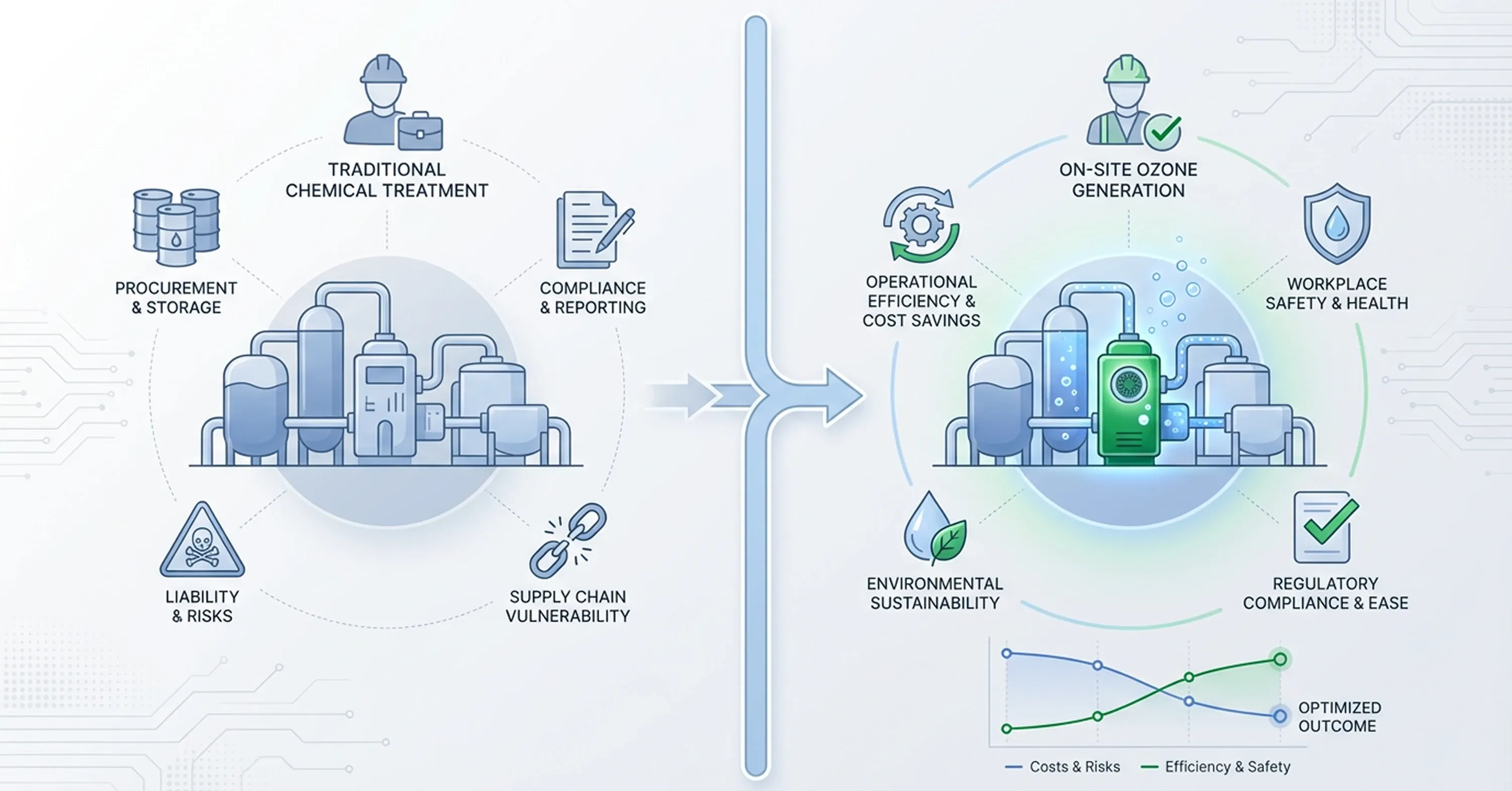
A direct comparison between ozone and traditional chlorine reveals the distinct operational differences of this new approach. Water treatment facilities require an analytical understanding of how these chemicals behave within their processing tanks. Ozone stands out because it acts as a reactive gas that neutralizes organic matter upon contact.
When water treatment facilities evaluate this method of water treatment, they look closely at contact time. Chlorine requires large contact basins to hold water for extended periods before it finishes its work. This slow reaction time creates bottlenecks during peak demand hours.
Ozone reacts faster, and this reduces the physical footprint required for processing tanks. For example, a case study compared systems and demonstrated a 3.54-minute contact time for ozone versus chlorine's 27 minutes. This measurable difference increases overall processing capacity.
Besides speed, ozone changes the chemistry of the treated water differently than chlorine. Facilities often study advanced oxidation processes to recognize why ozone leaves the water cleaner. The gas does not linger in the system after it interacts with organic matter. The key technical advantages of ozone include the following:
-
It decomposes into oxygen without harmful byproducts in the treated water.
-
It removes odor-causing molecules efficiently.
-
It minimizes the need for secondary dechlorination steps before discharge.
These technical characteristics simplify the end-stage processing steps for water treatment facilities, and they eliminate the need for ongoing chemical deliveries.
Hidden Financial Drains of Chemical Consumables
In contrast, conventional chlorination requires a continuous supply chain of liquid or gaseous chemicals. This ongoing reliance creates a financial burden that goes beyond the initial purchase price of the chlorine itself. Facilities must budget for delivery trucks, handling equipment, and safety training for their staff. Storing large quantities of hazardous chemicals introduces liability.
Facilities face new insurance requirements and potential regulatory fines if a leak occurs. Regulatory compliance documentation requires considerable administrative hours for these storage sites. Furthermore, localized supply chain disruptions can force plants to halt operations if chemical deliveries arrive late.
A transition to a different water treatment technology changes this financial equation. Because facilities produce ozone directly on site with ambient air and electricity, they do not buy chemical consumables. Facilities regain control over their daily operating costs.
According to verified industry assessments, on-site generation eliminates long-term chemical procurement and hazardous material transportation liability costs. Furthermore, ozone systems eliminate hazardous chemical storage and transportation, and this improves overall workplace safety. When facilities upgrade their approach to water disinfection, they exchange recurring operational expenses for a predictable infrastructure model.
Long-Term Cost-Benefit Analysis
A concrete financial model helps evaluate this predictable infrastructure model against legacy chlorination infrastructure replacements. A 10-to-20-year cost-benefit analysis shows how the financial trajectory changes after facilities install ozone generators. While the initial capital requirement for this method of water treatment exceeds the cost of a standard chlorine setup, the long-term savings offset the upfront expense. A financial evaluation of this transition includes specific components:
-
The initial purchase and installation costs for the generation equipment.
-
The daily operational costs related to electricity consumption.
-
The immediate savings from eliminating chemical delivery contracts.
-
The long-term financial impact over a 15-year lifecycle.
This evaluation reveals reductions in recurring budgets. Because the generation equipment produces the gas directly from ambient air, facilities do not pay for hazardous material transport or storage compliance. Research confirms that ozone systems deliver 40-75% chemical cost reductions over 10-15 year periods compared to chlorine-based treatment.
This predictable financial model protects budgets from sudden chemical supply shortages and fluctuating market prices. Furthermore, modern equipment designs prioritize manageable power consumption, and this keeps daily operational costs low. The upfront investment creates a self-reliant infrastructure that operates independently from external supply chain disruptions.
Reduction of Ongoing Chemical Expenditures
This independent infrastructure helps facilities experience budget relief when they eliminate constant chemical deliveries. Conventional chlorination demands a calculated volume of liquid chemicals to maintain operations. This process requires continuous purchase, transport, and storage of these consumables.
A modern water treatment technology severs this reliance on external chemical suppliers. The facility generates the necessary oxidation agent on-site. This operational change yields drops in recurring purchasing costs. For example, one facility reported an 80% chemical usage reduction after it switched to ozone systems. These savings fund other critical infrastructure maintenance tasks. The facility stops paying for chemical transport liabilities and gains a predictable operational budget.
Infrastructure for Energy Efficiency
Facilities further improve this predictable operational budget because modern generator designs consume less daily electricity. Older generation models required high amounts of electricity to convert ambient air into a usable gas. Today's low-frequency systems operate differently and require a fraction of the power to achieve the same results. This technological advancement matters because electricity represents the primary recurring cost for an on-site generation setup.
The demonstrated drop in energy usage makes the switch financially viable for smaller facilities. Financial analysts compared different methods and found that Pinnacle ozone systems use 25% less energy than competing water disinfection technologies. Facilities keep their utility bills low while they maintain peak processing capacity. This optimized power consumption improves the return on investment and solidifies the technology's financial advantage.
Secondary Operational Benefits
In addition to this financial advantage, peripheral cost savings improve the overall operational budget beyond direct chemical and energy reductions. Facilities often field public complaints about earthy tastes or foul smells in their output. Carbon filters or additional chemicals cost money and require extra maintenance hours to treat these aesthetic issues.
This method of water treatment acts as a proven solution for these specific problems. The reactive gas breaks down the geosmin compounds responsible for the foul smells before the water leaves the facility. A detailed evaluation report established that ozone treatment eliminates taste-odor compounds while it reduces associated public complaints. This process protects downstream filtration integrity and extends the lifespan of existing membrane equipment during normal operations.
Climate-Resilient Infrastructure
Beyond normal operations, seasonal weather changes and climate shifts create sudden water quality crises. Heavy spring rains wash organic matter and agricultural runoff into municipal reservoirs. These events cause nitrate spikes that exceed standard chemical processing capacities. Facilities need resilient infrastructure to handle these sudden changes without halting operations or violating safety standards. The flexibility of this water treatment technology solves this seasonal problem.
When nitrate levels spike, facilities increase the gas output from their on-site generators. The reactive gas neutralizes the heavy organic load quickly. Facilities understand this rapid response time after they compare UV and ozone during peak demand hours. UV light struggles to penetrate cloudy water, but the injected gas treats the entire volume uniformly. This method of water treatment works efficiently for large-scale municipal infrastructure and commercial applications alike.
Commercial indoor facilities face similar seasonal challenges with their recirculating supplies. Pathogens multiply rapidly when temperatures rise, and this threatens production. Conventional chemicals often damage delicate system components, so these facilities need a cleaner approach to water disinfection.
The injected gas neutralizes the pathogens and reverts to oxygen before reaching the end of the line. One commercial facility reduced its product rejection rate from 40% to under 3% after it implemented ozone. This adaptability makes the operational benefit evident and ensures uninterrupted production across different industrial sectors despite external challenges.
Conclusion
To summarize, this adaptable ozone-based method of water treatment eliminates the ongoing logistical challenges and safety risks that liquid chemical storage causes. Even though the upfront infrastructure investment is higher, this method removes hidden regulatory and chemical costs and improves long-term financial performance. A transition away from conventional chlorination provides both environmental benefits and operational reliability that evolving water safety standards demand.
Agritopia supplies the ozone equipment that makes this transition practical for water treatment facilities across the region. Contact us to find out which system fits your infrastructure requirements and begin the move toward a cleaner, more cost-effective method of water treatment.